
Turkish CLP-SEA Regulation
Turkish CLP (SEA) Regulation – Overview
Türkiye published the Regulation on Classification, Labelling and Packaging of Substances and Mixtures (SEA – Turkish CLP) in Official Gazette No. 28848 on 11 December 2013. SEA is aligned with the EU CLP Regulation (EC) No 1272/2008 and the UN Globally Harmonized System (GHS). The regulation was amended by the regulation published in Official Gazette No. 31330 (duplicate issue) on 10 December 2020, which replaced Annexes 1–6; the transition period for classification and labelling under the previous rules ended on 1 January 2023.
All transition periods under SEA have now ended. Substances and mixtures placed on the Turkish market must be classified, labelled and packaged in accordance with SEA, and Classification & Labelling (C&L) inventory notifications are submitted via the Chemicals Registration System (KKS), accessed through the Ministry’s Integrated Environmental Information System (ECBS). Safety Data Sheets must be prepared in line with KKDIK Annex II.
Important Topics:
- C&L notifications are required for all hazardous substances, regardless of the annual import or manufacturing quantity.
- Hazardous Polymers are in scope.
- Substances which are present a concentration above 0,1 % weight by weight (w/w) in those articles and which:
- are classified as carcinogenic, mutagenic or toxic to reproduction, category 1A,1B or category 2,or
- show persistent, bioaccumulative and toxic (PBT) properties, or
- very persistent and very bioaccumulative (vPvB) properties, or
- substances — such as those having endocrine disrupting properties or those having persistent, bioaccumulative and toxic properties or very persistent and very bioaccumulative properties, which do not fulfil the criteria of points (b) or (c) — for which there is scientific evidence of probable serious effects to human health or the environment which give rise to an equivalent level of concern to those of other substances listed in points (a) to (c).
Purpose and Scope of the SEA Regulation
The SEA Regulation sets out the administrative and technical rules for classifying, labelling and packaging substances, mixtures and certain articles placed on the market, so as to ensure a high level of protection of human health and the environment and their free movement.
The Regulation covers:
- the classification of substances and mixtures, and the labelling and packaging of hazardous substances and mixtures
- the obligation of manufacturers, importers and downstream users to classify substances and mixtures placed on the market
- the obligation of suppliers to label and package hazardous substances and mixtures placed on the market
- the obligation of manufacturers, producers of articles and importers to classify substances that are subject to registration or notification under KKDIK, even if they are not placed on the market
- the list of substances with harmonised classification and labelling in Part 3 of Annex 6
- classification and labelling notifications for substances
- the classification and labelling inventory made up of the harmonised entries and these notifications
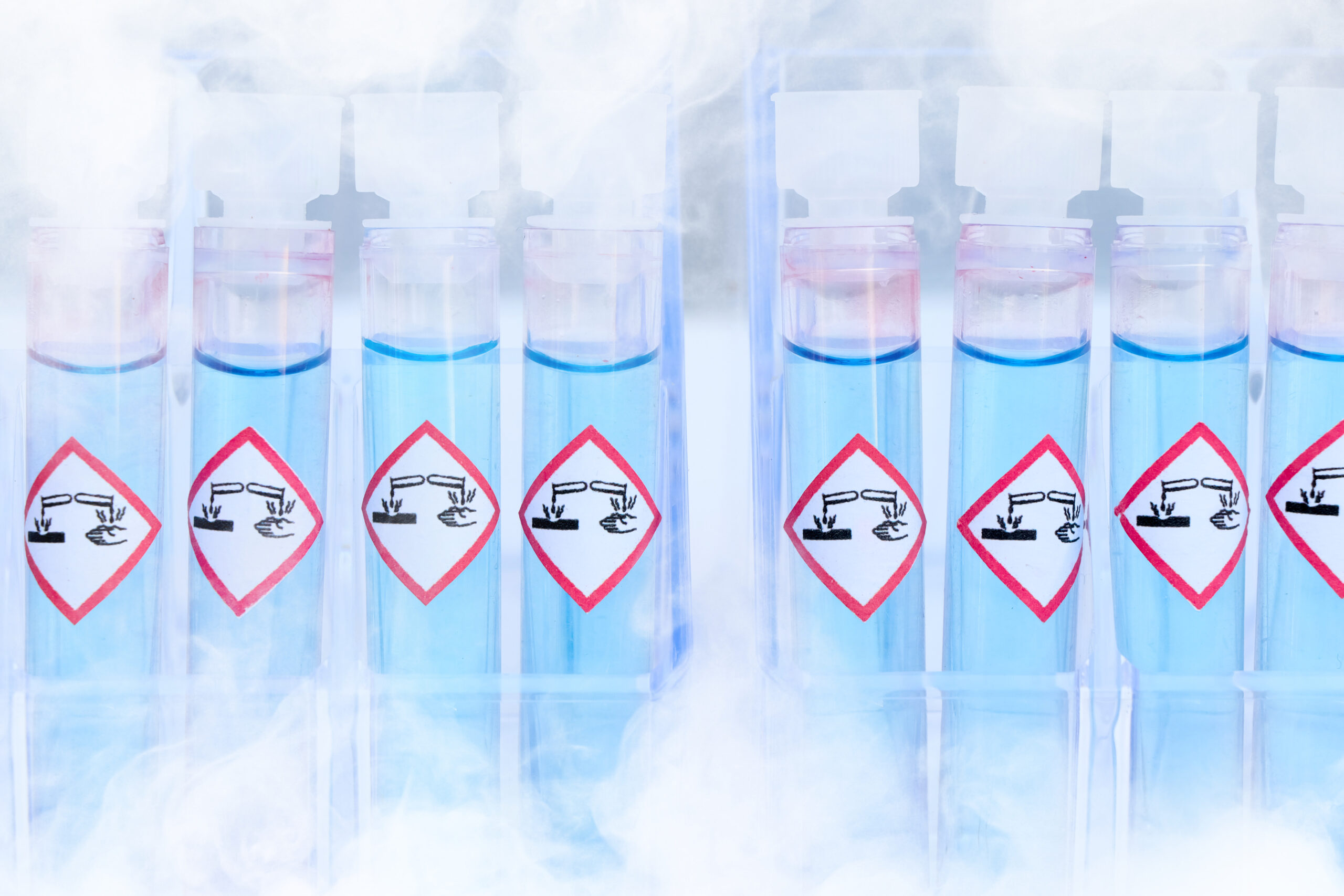
Products and Activities Outside the Scope of SEA
SEA does not apply to the following substances and mixtures in the finished state, intended for the final user:
- medicinal products for human use
- veterinary medicinal products and non-medicinal veterinary health products
- cosmetic products
- active implantable medical devices, medical devices and in vitro diagnostic medical devices
- food covered by the Turkish Food Codex, including flavourings and food additives
- feed
SEA also does not apply to:
- radioactive substances and mixtures covered by the Regulation on the Safe Transport of Radioactive Material
- substances and mixtures kept in temporary storage, in a free zone or in a customs warehouse for re-export, or in transit under customs supervision, provided they are not treated or processed
- non-isolated intermediates
- substances and mixtures manufactured or imported for scientific research and development and used under controlled conditions in line with Turkish workplace and environmental legislation
- waste as defined in the Waste Management Regulation
- the transport of dangerous goods by air, sea, road, rail and inland waterways, except where Article 35 applies
In specific cases, the competent authorities may also exempt certain substances and mixtures manufactured or imported for defence purposes.
General Principles of Classification, Labelling and Packaging
- Manufacturers, importers and downstream users classify substances and mixtures in line with Part 3 of the Regulation before placing them on the market.
- Where a substance has a harmonised classification in Part 3 of Annex 6, that classification must be used. Hazard classes or differentiations not covered by the harmonised entry are still classified under Part 3.
- If a substance or mixture is classified as hazardous, suppliers ensure that it is labelled and packaged in line with Parts 4 and 5 before it is placed on the market.
- Distributors, and downstream users who do not change the composition, may use the classification made by another actor in the supply chain.
- Suppliers in a supply chain cooperate to meet the classification, labelling and packaging requirements.
- Substances and mixtures that are not classified, labelled and packaged in accordance with SEA may not be placed on the market.
You can download the full text of the SEA Regulation (PDF, in Turkish) and our SEA presentation (PDF, in Turkish).
Turkish CLP (SEA) Services
Doruksistem provides global regulatory expertise by helping companies exporting products to Türkiye with identifying their TR-CLP (SEA) regulatory obligations, and prepares C&L notifications for submission to the Turkish competent authority.
Doruksistem also offers full declaration support and a consulting strategy and training package to support companies in meeting the CLP (SEA) compliance requirements.
Turkish Chemical Regulation Services
Doruksistem’s experts can assist you step-by-step with the process of meeting all your obligations to comply with the Turkish Chemicals Regulation.
Doruksistem regulatory services include:
- Only Representative Services
- Strategy and consulting services
- Assessment of your company’s regulatory obligations
- Preparation of data requirements and documentation for notification (including determination of physicochemical, toxicological, and eco-toxicological characteristics of substances if required)
- Submission of notifications in the format required
- Liaison with Turkish authorities where required
- Act as 'Turkish Representative’ on the behalf of non-Turkish operators
- Regulatory corporate training
Please contact for further information you need and/or for Doruksistem Only Representative Services for Türkiye.