
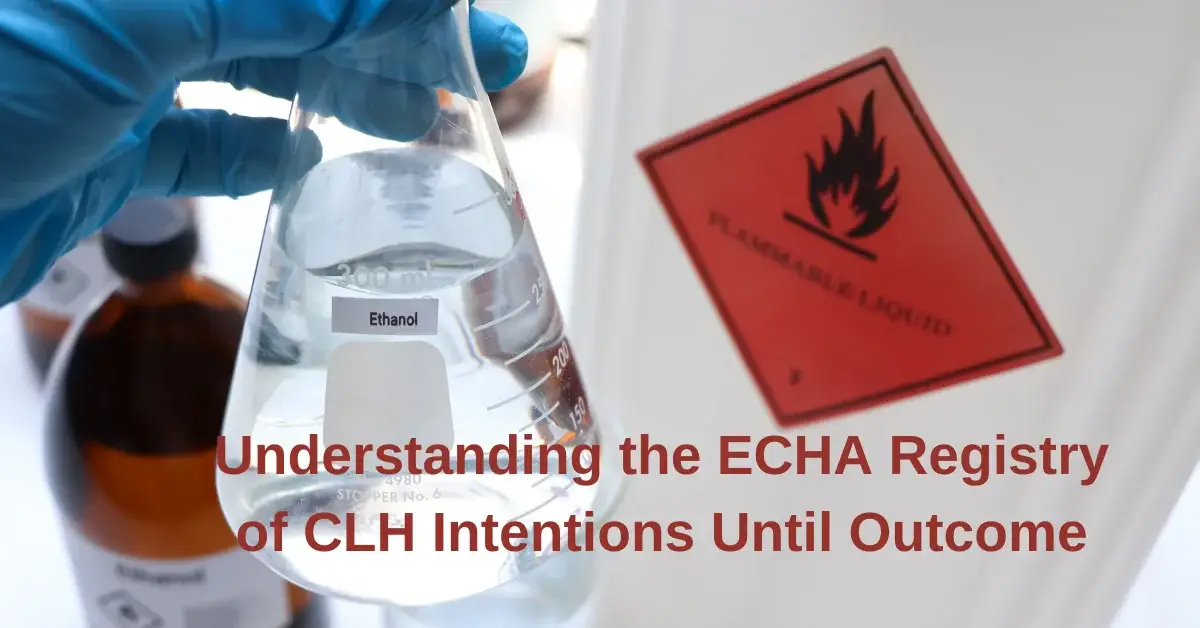
The European Chemicals Agency (ECHA) plays a crucial role in ensuring the safety and regulation of chemicals within the European Union. One of the key tools ECHA uses to manage chemical risks is the Registry of CLH Intentions Until Outcome. This registry is a vital component of the Classification, Labelling, and Packaging (CLP) Regulation under the REACH framework. But what exactly does this registry entail, and why is it important for businesses and consumers?
What is the Registry of CLH Intentions?
The Registry of CLH Intentions Until Outcome is a public database maintained by ECHA that lists substances that are undergoing or are scheduled for harmonized classification and labelling (CLH) assessment. Harmonized classification is a process that aims to ensure that the hazards of chemicals are communicated consistently across the EU. This is crucial for protecting human health and the environment from the risks posed by hazardous chemicals.
Why is the CLH Registry Important?
- Transparency and Safety: The registry provides transparency by making information about ongoing and planned CLH assessments publicly available. This allows manufacturers, importers, and downstream users to stay informed about potential changes in the classification and labelling of chemicals they may be using.
- Regulatory Compliance: For businesses, keeping up with the registry is essential for regulatory compliance. Companies need to ensure that they comply with the latest classifications and labelling requirements to continue operating within the EU market.
- Public and Environmental Health: By updating and maintaining the CLH registry, ECHA ensures that the public and the environment are protected from harmful chemical exposures. It allows for proactive measures to be taken before any significant risks manifest.
How Can Businesses Stay Compliant?
To stay compliant with the latest CLH intentions and outcomes, businesses should regularly monitor the ECHA registry and participate in public consultations when relevant. They should also be prepared to update their product classifications and labels in line with any new harmonized classifications, ensuring they are always in line with the most current regulations and safety standards.
Have Your Say in Consultations
Contribute to chemical safety in the EU by submitting your input on our topical consultations and calls for evidence. Substances subject to consultation:
- 4-hydroxy-4-methylpentan-2-one (Diacetone Alcohol; EC 204-626-7, CAS 123-42-2) is commonly used in coatings and paints (such as coil coatings, wood varnishes, and architectural coatings).
- 8-methyldecan-2-yl Propionate (8-methyldecan-2-yl Propanoate; EC -, CAS 81931-28-4) is used as a synthetic compound for insecticides and acaricides.
Businesses handling products containing these substances should closely follow ECHA’s updates, as the new regulations could impact the classification and labeling of their products.
Have your say until 18 October 2024.
Share
Facebook
LinkedIn
Twitter
Email
Print
Newsletter
Subscribe to our Newsletter & Event right now to be updated.